
Flow chemistry improves nanoparticle size control by letting you precisely tune mixing, residence time, and temperature so nucleation and growth are decoupled cation and anion analysis. You’ll get faster, more uniform supersaturation, reduced local concentration gradients, and consistent shear that narrow size distributions and lower polydispersity. Inline analytics and steady feeds give reproducible batches and easier scale-up via parallelization. Material and reactor choices prevent fouling and preserve kinetics. Keep going and you’ll find specific parameters, examples, and scale-up tips.

Why Particle Size Matters in Applications
Particle size critically determines a nanoparticle’s physical, chemical and biological behavior, so you’ll see performance change as size shifts. You’ll appreciate that smaller particles increase surface area-to-volume ratios, accelerating reaction kinetics, catalyst turnover https://laballiance.com.my/, and payload release rates; quantitative studies show rate constants often scale with available surface area. In biological targeting, size governs circulation time, cellular uptake pathways, and tissue penetration—sub-100 nm particles favor endocytosis and tumor penetration, while larger ones are cleared faster by phagocytes. You’ll use size as a tunable parameter to balance stability, dose delivery, and biodistribution. Design choices should reference empirical size-dependent metrics (e.g., zeta potential, diffusion coefficients, clearance half-life) and prioritize reproducible control to translate innovations reliably into practical applications.
Limitations of Traditional Batch Nanoparticle Synthesis
Although batch methods are simple and widely used, they often can’t deliver the reproducible size control you need for predictable performance. You’ll face mixing heterogeneity, local concentration gradients and uncontrolled nucleation bursts that broaden size distributions. Scale-up amplifies these issues: small variations in reaction kinetics translate to different growth regimes between lab and production. Temperature and solvent effects are harder to stabilize in large vessels, so solvent-dependent solubility and diffusion alter nucleation/growth balance. Reproducibility suffers when manual additions and timing vary; statistical reproducibility studies often show higher polydispersity from batch runs. For innovation-focused work, these limitations slow iteration and raise cost of qualification. Recognizing these constraints clarifies why alternative methods that decouple variables are attractive.
Key Flow Chemistry Parameters That Control Size
When you move synthesis into flow, several tightly coupled parameters let you tune nucleation and growth with far greater precision than batch; residence time, mixing rate, reagent concentration, temperature profile, and flow regime each shift the balance between nucleation burst and controlled growth. You’ll control particle size by adjusting flow rate to set residence time and shear; faster flow rate shortens growth windows, favoring smaller, more uniform nuclei. Mixing time determines how rapidly supersaturation is achieved—shorter mixing time yields sharper nucleation bursts and narrower size distributions. Precise reagent concentration gradients and temperature ramps let you decouple nucleation from growth kinetics. Choose laminar or segmented flow to manipulate dispersion and heat transfer. Quantify effects with in-line analytics and iterate parameters systematically to reach target sizes reproducibly.
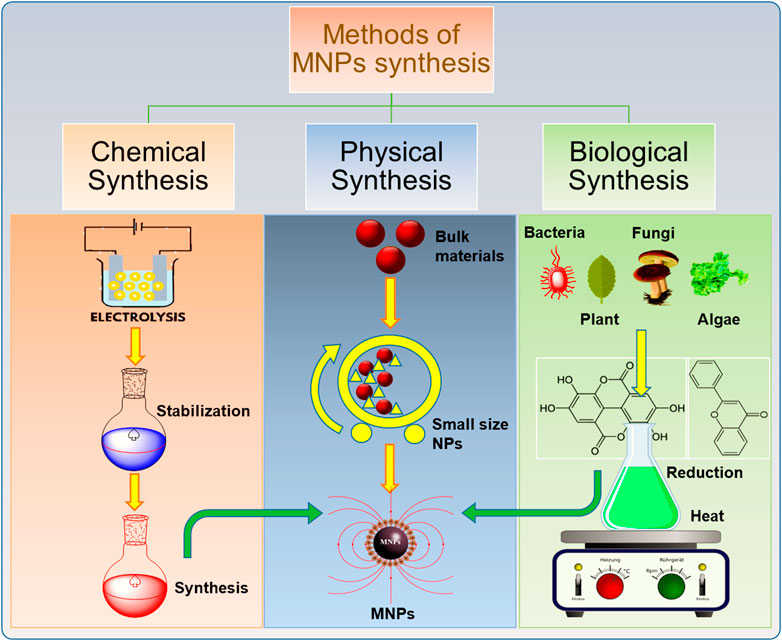
Case Studies Demonstrating Improved Size Uniformity
Having seen how residence time, mixing rate, concentrations, temperature profiles, and flow regime tightly control nucleation and growth, we’ll now examine concrete examples where those levers produced markedly improved size uniformity. You’ll review studies where microfluidic templating yielded narrow size distributions for quantum dots by enforcing homogeneous nucleation zones; coefficients of variation dropped from ~25% to <8% with controlled shear and rapid quench. In metallic nanoparticle synthesis, combining continuous flow with ligand engineering produced reproducible core sizes and stabilized surfaces, reducing polydispersity while enabling post-synthesis functionalization. A biomedically oriented case showed flow-enabled reproducibility across batches, validated by TEM and DLS. These case studies demonstrate that integrating precise flow control with chemistry innovations delivers scalable, repeatable improvements in nanoparticle size uniformity.
Practical Considerations for Scaling Flow-Based Nanoparticle Production
Because lab-scale flow advantages don’t automatically translate to production, scaling nanoparticle manufacture requires systematic attention to hydrodynamics, heat and mass transfer, materials compatibility, and process control. You’ll validate scale-up by mapping residence time distributions and shear profiles to maintain nucleation kinetics; compare dimensionless numbers (Re, Pe) across scales to predict mixing and heat removal. Choose reactor materials that resist fouling and solvent exposure, and design for cleaning and continuous sterilization where biologics are involved. Implement modular reactors to add capacity without changing core chemistry, enabling parallelization and staged optimization. Instrumentation must monitor particle size in-line (DLS, FBRM) with closed-loop feedback to control reagent feeds, temperature, and flow rates. Document change control and batch definition for regulatory readiness.
